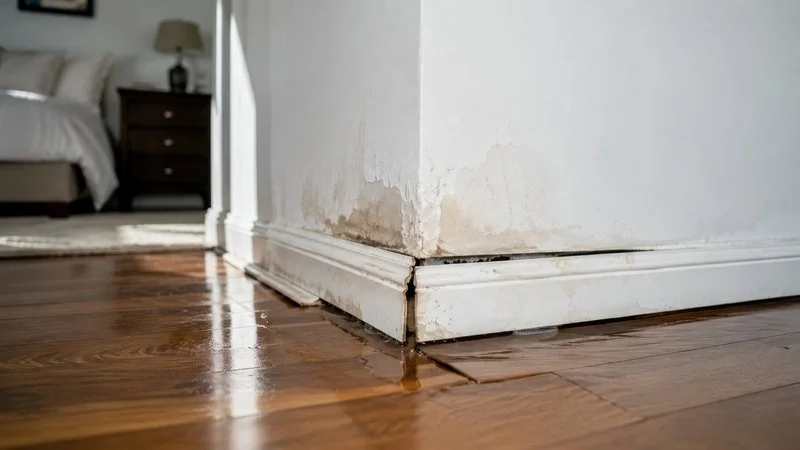
Water Intrusion, Leaks, and Buildilng Envelope Defects
Water intrusion is the most common construction defect, and often the most destructive. A building's envelope (its windows, doors, flashing, siding, stucco, weather barriers and roof) is supposed to keep water out. When any part of it is installed wrong, water gets behind finished surfaces where it can rot framing, corrode fasteners and grow mold for years before anyone sees it.
Signs of Water Intrusion
Staining, bubbling paint or soft drywall below windows or around doors
Musty odors or visible mold, especially in closets, basements and exterior walls
Cracked, stained or bulging stucco
Swollen, warped or delaminating siding and trim
Water in the basement or crawlspace after storms or snowmelt
Rot at deck ledgers, sill plates or window sills
Leaks that come back after the builder "fixes" them
Common Building Envelope Defects
The problems I see most often are missing or reverse-lapped flashing at windows and doors, weather-resistive barriers installed out of sequence, stucco without proper weep screeds or drainage planes, siding installed without required clearances, missing kickout flashing where roofs meet walls, and below-grade waterproofing that was skipped or damaged during backfill. Plumbing failures inside walls can cause the same kind of hidden damage.
Why Hidden Damage Matters
A single visible stain is often a small sign of a much larger problem. Destructive testing by a qualified building envelope consultant is usually the only way to see how far the damage goes. That investigation is what drives the repair scope, and the repair scope drives the value of the claim. Accepting a builder's spot repair before that work is done can leave you paying for the rest later.
Insurance and Water Damage
Homeowners policies usually exclude the cost of correcting faulty workmanship but may cover some resulting water damage. Meanwhile, the builder and its subcontractors usually carry commercial general liability insurance that can respond to property damage caused by their work. Sorting out which policies apply is part of building the claim.
Frequently Asked Questions
Is mold from a leak a construction defect? Mold itself is a symptom. If the water causing it comes from defective windows, flashing, roofing, grading or plumbing, the mold damage can be part of a construction defect claim against the parties responsible.
The builder keeps patching the same leak. What should I do? Repeated repairs at the same location usually mean the underlying cause hasn't been addressed. Document each repair attempt and talk to a lawyer before the claim deadline runs, since repeat repairs don't always pause it.
Can I make repairs before filing a claim? You should take reasonable steps to stop ongoing damage. Hold off on permanent repairs until the conditions are documented, so you don't destroy the evidence you need.
Contingent fee representation is available for qualifying water intrusion claims, and hourly arrangements are available for other matters. Call 303-409-7529 for a free case review.